
An Australian's Guide to Relocating and Retiring Across Southeast Asia

Brenden Sharp at a Cafe in Ha long Bay Vietnam
Brenden Sharp at a Cafe in Ha long Bay Vietnam
The Aussie’s Guide to Retiring Abroad
A retired Aussie easing into the idea of a new life overseas often starts with a very human inventory of goals and limits, and that inventory shapes everything that follows. They think about what matters most in retirement—whether quieter days by the sea, easy access to healthcare, or staying close to the grandkids—and personal health needs like mobility, medication schedules, and chronic condition management quickly become non-negotiable.
These priorities sit alongside practical questions about income, social life, and how adventurous they feel. Together, they turn a vague notion of ‘retirement’ into a list of real requirements and comforts.
Look at the map of Southeast Asia and certain spots keep reappearing in conversations among retirees because they combine warm weather with welcoming rhythms of life. Thailand tempts with its beaches, friendly locals, and well-developed tourist infrastructure, while Malaysia offers a blend of modern cities and affordable healthcare that appeals to those wanting balance. Vietnam brings vibrant street life and low day-to-day costs, the Philippines draws English-speaking communities and island living, and Indonesia, especially Bali, offers a cultural depth and expat scene that many find magnetic.
Each destination’s climate, cultural texture, and infrastructure set the stage for how an ordinary day looks, from morning markets to hospital access, and that matters more than postcard images when choices are made.
| Country | Typical Monthly Cost of Living (indicative) | Senior Amenities & Healthcare Availability |
| Thailand | Lower to moderate — affordable local services, variable in Bangkok vs provinces | Good private hospitals in major cities, active expat clubs and retirement communities |
| Malaysia | Moderate — competitive private services, higher in urban centres | High-quality private healthcare (KL), established expat networks, English widely used |
| Vietnam | Low to moderate — inexpensive local costs, rising in Hanoi/Ho Chi Minh | Growing private hospitals in major cities, smaller expat communities |
| Philippines | Low to moderate — especially outside Manila, English widely spoken | Mixed healthcare quality; strong English-speaking expat/social scenes in coastal areas |
| Indonesia (Bali) | Low to moderate — tourist hubs pricier, rural cheaper | Good private clinics in Bali and Jakarta, large expat community in Bali with social clubs |
When people compare these countries, they almost always land on a few clear appeal factors that push one place ahead of another. Cost of living is a headline attraction because it determines how far a fixed pension or superannuation will stretch, while amenities like international-standard hospitals, reliable transport, and good supermarkets shape everyday comfort.
Expat communities matter too, because familiar faces, clubs, and services in English make practical navigation and social life easier, and they can turn an unknown shore into a friendly neighbourhood.
Those three things—affordability, services, and community—tend to explain why retirees cluster in Thailand, Malaysia, Vietnam, the Philippines, and Indonesia rather than scattering evenly across the region.
Choosing a Destination
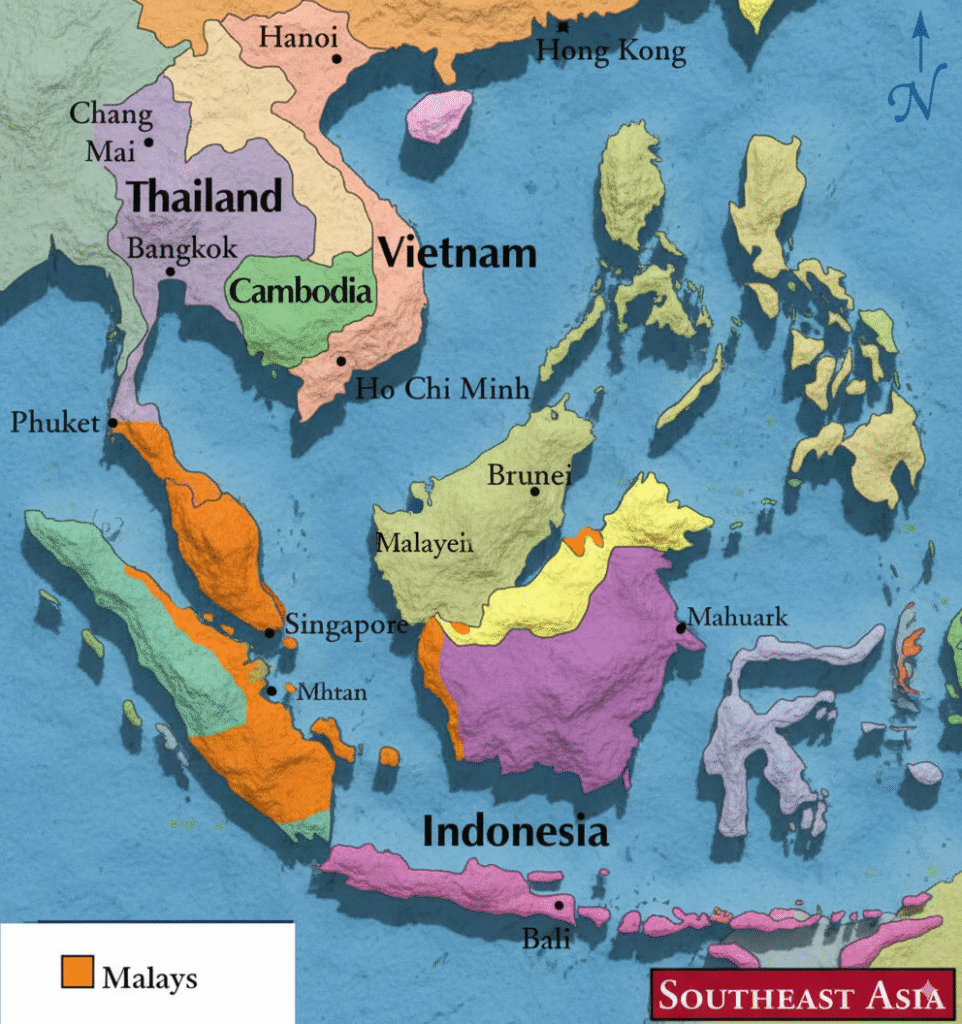
South East Asia Map
A retirement destination is simply a place chosen for living after finishing one’s career, and it carries weight beyond weather and scenery because it becomes the setting for everyday routines, medical care, and social networks. Choosing that place means matching its climate and culture to personal rhythms and checking its infrastructure for things like reliable utilities, transport, and hospitals, because those systems decide how easily a day-to-day life unfolds.
That concrete decision affects finances, friendships, and health management, and it reframes abstract ideas of relaxation into the tangible realities of where one will shop, meet people, and see a doctor.
An expat community is a group of people living outside their native country, often with similar cultural backgrounds, and their presence changes the texture of a neighbourhood in practical ways. They create informal support networks that help with housing searches, language tips, and social invitations, and they often set up clubs, volunteer groups, and meet-ups that fill the gap between local society and newcomers’ expectations.
For a retiree, finding an active expat community can shorten the adjustment period and provide companions for everything from weekly walks to navigating local bureaucracy.
| Expense Category | Typical Monthly Range (indicative) | Key Local Cost Drivers |
| Housing (rent) | A$450–2,250 depending on city and standard | Location (city vs rural), utilities, furnished vs unfurnished |
| Food & groceries | A$225–750 | Eating local vs imported groceries, dining out frequency |
| Healthcare & insurance | A$75–600 | Private vs public care, age-related needs, insurance coverage |
| Transport & services | A$45–300 | Car ownership vs public transport, ride-hailing availability |
| Taxes & fees | Variable | Residency status, local tax rules, visa fees |
Cost of living is the amount of money needed to cover basic expenses such as housing, food, taxes, and healthcare in a specific location, and it determines how comfortable a fixed income will feel. Looking at rental prices, grocery bills, transport costs, and fees for medical appointments reveals where a pension will allow luxuries versus where it will only cover basics, and this comparison often drives the final choice of country and city.
Layering that cost picture against expected income gives a retiree a simple, practical sense of lifestyle possibilities, from weekly markets to private clinic visits.
Most retirees narrow options down to a handful of countries based on climate comfort, cultural fit, and infrastructure reliability, and then they run those choices against their own needs. A cool, dry season might matter to someone with arthritis, while proximity to an international airport matters to someone who wants regular visits from family, and good broadband becomes essential if the grandkids video-call often.
This matching process reveals clear trade-offs: a cheaper town with fewer hospitals may require extra planning, while a pricier city can deliver peace of mind through specialist care and easier transport.
Visa Pathways
**`
`**
A retirement visa is a visa category specifically designed to allow foreign retirees to stay long-term in a host country, and it usually comes with financial and age-related requirements. Different nations attach different strings to these visas, from minimum savings thresholds to mandatory health insurance, and those conditions shape the feasibility of settling in any given place. Understanding what a retirement visa permits and requires is often the decisive administrative step between dreaming of a place and actually living there.
| Country (example) | Typical Initial Duration | Renewal & Eligibility Notes |
| Thailand (Retirement) | 1 year (renewable) | Requires age threshold, proof of funds or income; annual reporting may apply |
| Malaysia (My Second Home) | 5–10 years (renewable) | Financial deposit requirement, medical insurance, background checks |
| Indonesia (Retirement KITAS) | 1 year (convertible) | Requires sponsor/employer, minimum income, local address registration |
A long-stay visa permits extended stays usually beyond 90 days, and it is often renewable so a retiree can build a life without constant border runs. Some countries offer annual renewals, others five-year options, and the ease of renewal depends on keeping financial proofs, health checks, and sometimes local sponsorship up to date. Knowing whether a visa will require yearly paperwork or a more stable multi-year permission changes both the emotional and logistical sense of security for someone moving their life overseas.
**`
`**
Proof of financial means is official evidence such as pension statements or bank balances demonstrating sufficient funds to support oneself, and it typically forms the backbone of visa applications for retirees. Governments want reassurance that new residents won’t become a public burden, so they ask for pensions, fixed deposits, or regular income streams to be documented and sometimes verified by local banks. Gathering and translating these documents, and keeping them current, is a practical chore that directly affects whether a visa is granted or renewed.
| Country | Typical Visa Duration & Renewal | Key Legal Obligations for Retirees |
| Thailand | 1-year retirement visa, annual renewal with documentation | Maintain minimum funds, report address, follow visa conditions |
| Malaysia (MM2H) | Multi-year programme with periodic renewals/conditions | Minimum financial commitments, medical insurance, follow residency rules |
| Philippines | Long-stay options up to permanent residency | Maintain valid visa status, renewals at immigration, local registration |
Visa duration, renewals, and legal obligations differ across Southeast Asia, and understanding each country’s clockwork prevents nasty surprises. Some visas require annual renewal with fresh medical certificates, others expect proof of continued income, and many carry obligations about reporting local addresses or not working without a permit. Learning the rhythm of renewals and legal responsibilities turns what looks like a permissive welcome into a predictable administrative routine that must be built into the retirement plan.
Budgeting and Money Matters
| Expense Category | Example Monthly Range (low–high, AUD) | Practical Planning Tips |
| Accommodation | 450–2,250 | Consider long-term rental discounts, insurance, proximity to healthcare |
| Food & groceries | 225–750 | Mix local markets with occasional imported items to control costs |
| Healthcare & insurance | 75–600 | Buy international expat cover for chronic conditions, check local clinic fees |
| Transport & utilities | 45–300 | Use public transport or scooters in cities; factor in electricity for aircon |
Comparing typical monthly expenses for accommodation, food, transportation, and healthcare brings retirement planning down to concrete arithmetic and clarifies how different cities stack up. This comparison is the core of cost of living and financial planning for retirement because it shows where income will cover private healthcare or where public options must be relied upon, and it often leads to choices about city versus smaller town living.
Working through sample budgets reveals which lifestyle choices are affordable and which would require cutting back or supplementing income.
**`
`**
Currency exchange rate is the value of one currency for the purpose of conversion to another, and it directly affects how far a foreign pension or superannuation will stretch when paid into a local account. Small movements in exchange rates can change monthly spending power significantly over time, so retirees track rates, consider timing transfers, and sometimes use specialist services to manage conversion costs. Treating exchange rates as part of the budget rather than a minor annoyance turns financial planning from guesswork into manageable decisions about when and how to move funds.
| Country | Representative Cost of Living Index (relative) | Primary Drivers |
| Thailand | 50–70 (varies by city) | Urban housing, tourism-driven prices in hotspots |
| Malaysia | 60–80 | Higher urban services in KL, stronger private healthcare costs |
| Vietnam | 40–65 | Lower local goods costs, rising urban services |
| Philippines | 45–70 | Varies widely; Manila higher, provincial lower |
| Indonesia (Bali) | 50–75 | Tourist areas increase prices; rural regions cheaper |
A cost of living index is a numerical indicator comparing the cost of consumer goods and services between places, and it gives a quick, comparable snapshot of relative affordability. Looking at such an index helps a retiree spot which cities are unusually expensive for their region and which offer unexpectedly good value, though indices simplify local realities and should be paired with itemised budgets. Used together with local price checks for rent, groceries, and clinic fees, the index becomes a useful compass rather than a definitive map.
**`
`**
Pensions, superannuation, and other retirement income sources are the lifeblood of an overseas retirement, and managing them abroad demands planning for currency, tax rules, and access. Some retirees keep accounts in Australia and pull funds as needed, others set up local bank accounts to pay monthly bills, and many consult financial advisers about tax treaties to avoid double taxation. Balancing the predictability of regular pension payments with the flexibility of local accounts ensures bills and healthcare are paid without scrambling for cash.
Healthcare and Insurance
Expat health insurance is a health insurance plan designed to cover medical expenses for Australians living abroad, and those plans vary widely in coverage, networks, and cost. Some policies cover evacuation back to Australia, others limit coverage to private clinics within the country, and choosing a plan means matching medical needs, chronic condition coverage, and the likelihood of specialist care. Balancing premium costs against potential out-of-pocket expenses is the ordinary calculus that keeps unexpected medical bills from upending a retirement budget.
**`